The U.S. Strategic Petroleum Reserve is low. Here's why you should care
In an aerial view, the Strategic Petroleum Reserve storage at the Bryan Mound site is seen on October 19, 2022 in Freeport, Texas. Brandon Bell/Getty Images North America hide caption Deep in the gi…
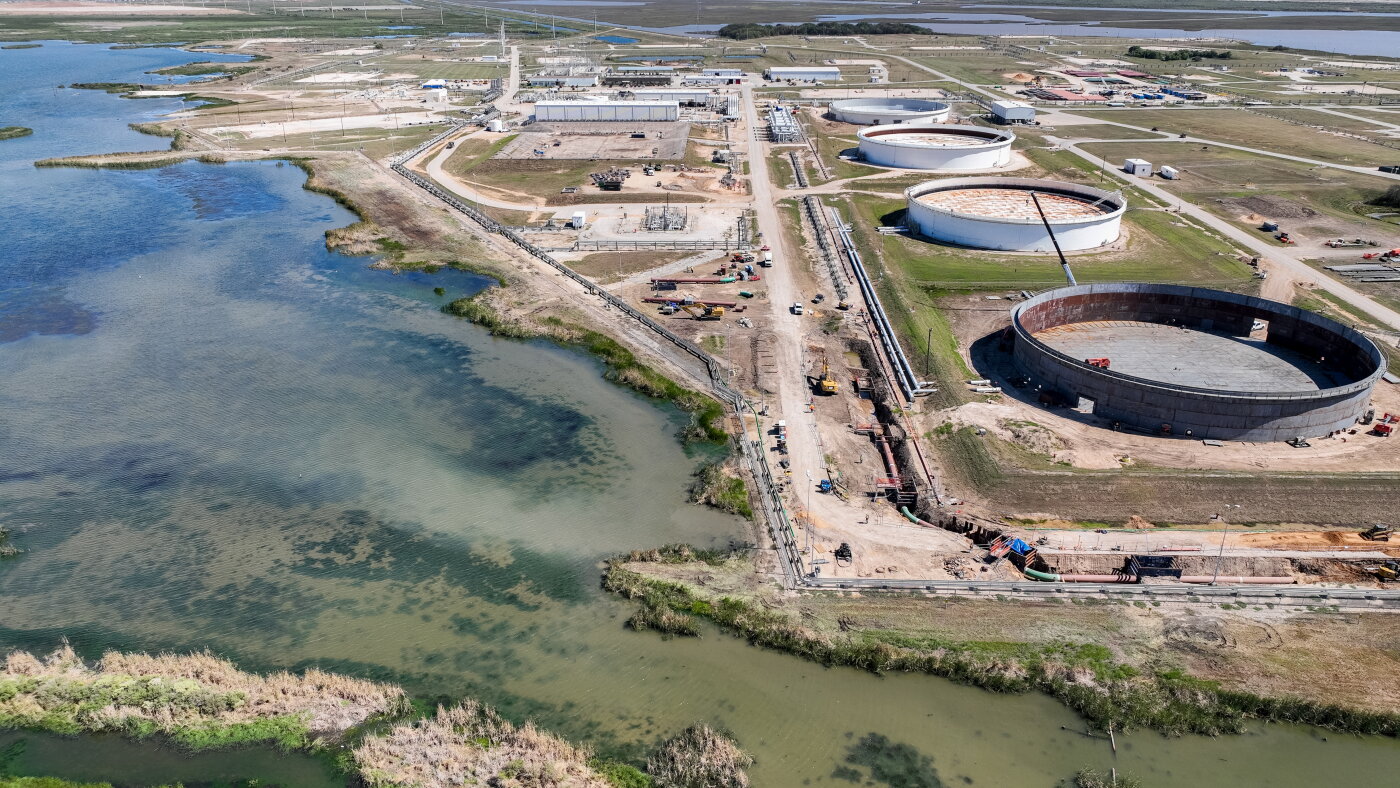
In an aerial view, the Strategic Petroleum Reserve storage at the Bryan Mound site is seen on October 19, 2022 in Freeport, Texas. Brandon Bell/Getty Images North America hide caption
Deep in the giant underground salt caverns of Louisiana and Texas, the U.S. government stores hundreds of millions of barrels of crude oil.
The Strategic Petroleum Reserve is a special government oil stockpile that eventually gets refined into the things people rely on, like gasoline and diesel.
But now the reserve is low, threatening one of the few government levers to ease high gasoline prices.
Since the U.S. and Israel went to war with Iran in late February causing an oil shipping logjam, the Trump administration has tapped into the stockpile multiple times in an effort to boost the country's fuel supplies.
Gas prices are still high, diesel is at a record high, and the reserve has shrunk more than 30% in six months. While the reserve held around 415 million barrels of oil in February, it now holds less than 285 million barrels of oil — lower than it has been since the early 1980s .
These rapid drawdowns of oil threaten the salt caverns' structure, says Samantha Gross , director of the energy security and climate initiative at the Brookings Institution, a nonpartisan policy think tank. As the reserves get lower and lower, the physical facilities can get degraded, Gross says: " You can damage them by pumping too much out of them."
And there's an economic risk, too, as the war with Iran drags on, says Ben Cahill , who covers the global energy sector as a non-resident senior fellow at the Atlantic Council, a nonpartisan think tank. Before the war, global oil stockpiles were high and there was lots of oil on ships across the world's oceans. Now that oil has been mostly used up. Should the U.S. want to replenish its reserves, there's a lot less to go around, he says. Brent crude, the global benchmark, remains over $100 a barrel — 47% higher than when the war began.
Read Full Story at NPR News →