NASA's Hubble captures a star-spangled sea of 500,000 stars
Celebrating the United States' 250th anniversary, NASA released a stunning Hubble portrait of Messier 3, an ancient globular cluster with more than 500,000 stars. The remarkable cluster is helping sci
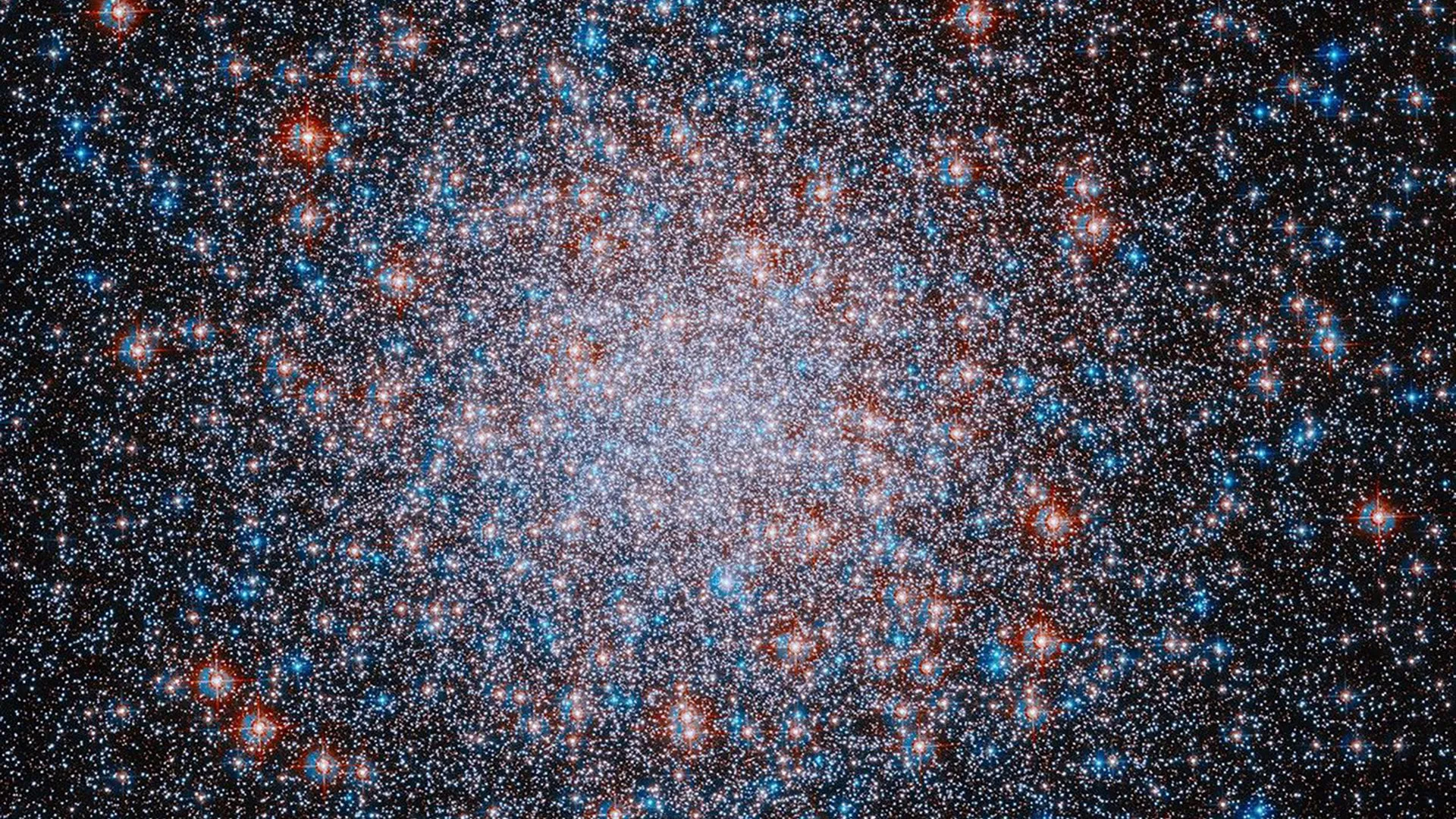
Celebrating the United States' 250th anniversary, NASA released a stunning Hubble portrait of Messier 3, an ancient globular cluster with more than 50
Read Full Story at ScienceDaily →Why This Matters
The Hubble Space Telescope's latest image of Messier 3 offers more than just celestial beauty—it serves as a cosmic time capsule, revealing the conditions of the early universe through one of its oldest star systems. This discovery underscores Hubble’s enduring role in advancing astrophysics, particularly in understanding stellar evolution and the structure of globular clusters, which are among the first objects to form in galaxies.
Background Context
Messier 3, first documented in 1764 by Charles Messier, is a globular cluster located roughly 34,000 light-years away in the constellation Canes Venatici. These clusters are relics of the Milky Way’s formation, containing stars that are often over 10 billion years old—older than Earth itself. Their dense stellar populations make them ideal laboratories for studying gravitational interactions and stellar dynamics.
What Happens Next
Further analysis of Messier 3’s stars could refine models of stellar aging and chemical composition, potentially challenging existing theories about globular cluster formation. Upcoming telescopes like the James Webb Space Telescope may provide deeper infrared observations, revealing fainter stars and uncovering hidden details about the cluster’s history. Researchers will also compare these findings with other globular clusters to identify patterns in galactic evolution.
Bigger Picture
Globular clusters like Messier 3 highlight humanity’s quest to map the universe’s ancient past, bridging gaps between astronomy and archaeology. As space telescopes continue to push boundaries, such discoveries reinforce the importance of long-term scientific investments, especially amid debates over funding for fundamental research. They also remind us that cosmic wonders are not just distant spectacles but keys to unlocking Earth’s place in the cosmos.