NASA telescope maps magnetic fields of pulsar PSR J1101−6101
NASA’s IXPE measured the magnetic fields of pulsar PSR J1101−6101, confirming twisted field lines create its X-ray beams. This helps test extreme physics theories and understand how pulsars energize s
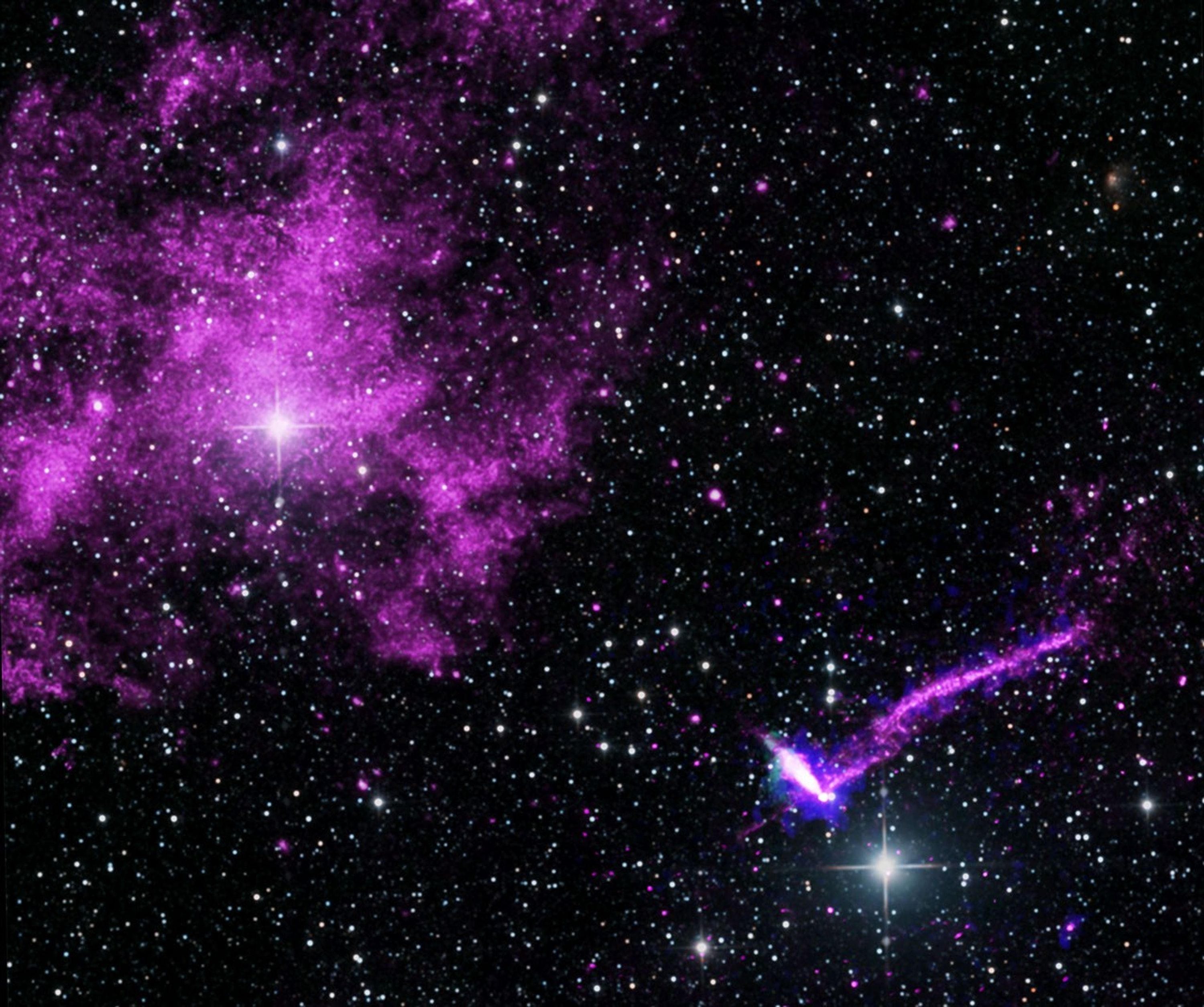
NASA’s Imaging X-ray Polarimetry Explorer (IXPE) has directly measured the magnetic fields of PSR J1101−6101, a pulsar spinning inside the Lighthouse
Read Full Story at NASA →Why This Matters
The confirmation that twisted magnetic fields shape pulsar X-ray beams sharpens our view of neutron stars as cosmic laboratories for extreme physics. These findings could redefine how we interpret pulsar energy emissions, potentially bridging gaps between quantum mechanics and general relativity in environments where gravity and magnetism reach their most violent extremes.
Background Context
Pulsars, first discovered in 1967, have long been enigmatic beacons of electromagnetic radiation, yet their internal magnetic dynamics remain partially obscured by distance and scale. NASA’s Imaging X-ray Polarimetry Explorer (IXPE) leverages a decade of advancements in X-ray polarization detection, offering a new lens to probe these celestial lighthouses without the interference of optical distortions.
What Happens Next
Future IXPE observations may target other high-energy pulsars to validate whether twisted magnetic field models apply universally. Scientists will likely refine theoretical simulations of neutron star interiors, while instruments like the upcoming X-ray Polarimeter Satellite (XPoSat) could expand this research into gamma-ray regimes, pushing the boundaries of astrophysical measurement.
Bigger Picture
This breakthrough aligns with a broader renaissance in high-energy astrophysics, where polarization studies are unlocking secrets of black holes, magnetars, and now pulsars. As next-generation telescopes come online, the interplay between magnetic fields and cosmic radiation is poised to reshape our understanding of the universe’s most energetic phenomena.