Fifty years after Mao’s death, China has transformed. DW looks at why his political legacy still matters.
On September 9, 1976, Mao Zedong died. The revolutionary leader who led the Chinese Communist Party (CCP) to power and founded the People's Republic of China left behind a profoundly contradictory hi…
On September 9, 1976, Mao Zedong died. The revolutionary leader who led the Chinese Communist Party (CCP) to power and founded the People's Republic of China left behind a profoundly contradictory historical legacy.
He shaped the narratives of revolution, nation-building and national independence, but also left behind immense social trauma as a result of successive political campaigns and persecutions.
Over the past five decades, China has undergone radical changes.
When Mao died, China was still a poor and relatively isolated communist state. Today, it is the world's second-largest economy, deeply embedded in the supply and value chains of global capitalism, with a vast private sector, a large urban middle class and a highly digitalized society.
Zhang Lun, a professor at Cergy-Paris University, said Mao left behind four major political legacies: the authoritarian and highly centralized political system; a model of governance that relies on revolution and political campaigns to solve social problems; populist tendencies marked by anti-elitism and anti-rationalism; and utopian visions of egalitarianism and moralism.
From the perspective of political legacies, Zhang told DW, the most fundamental change in China over the past five decades has been "de-Maoization" — while its greatest challenge has been that this process was never fully completed.
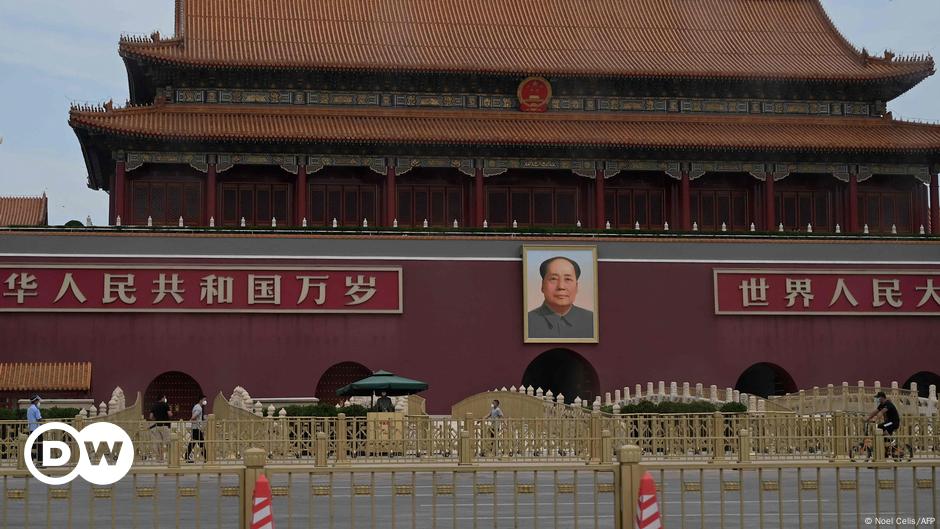
Mao's name remains written into the CCP's constitution, while his thought remains part of China's official ideology and his portrait still hangs in Beijing's Tiananmen Square.
Mao helped forge the Chinese Communist Party, and his insistence on the party's supremacy over the state and society has remained a fundamental principle throughout the decades, said Jean Christopher Mittelstaedt, professor at the University of Zurich.
Read Full Story at DW World →