Euclid telescope finds two ancient massive black holes
Euclid telescope discovered two quasars, powered by black holes over a billion times the Sun's mass, just 800 million years after the Big Bang. These findings challenge current black hole growth model
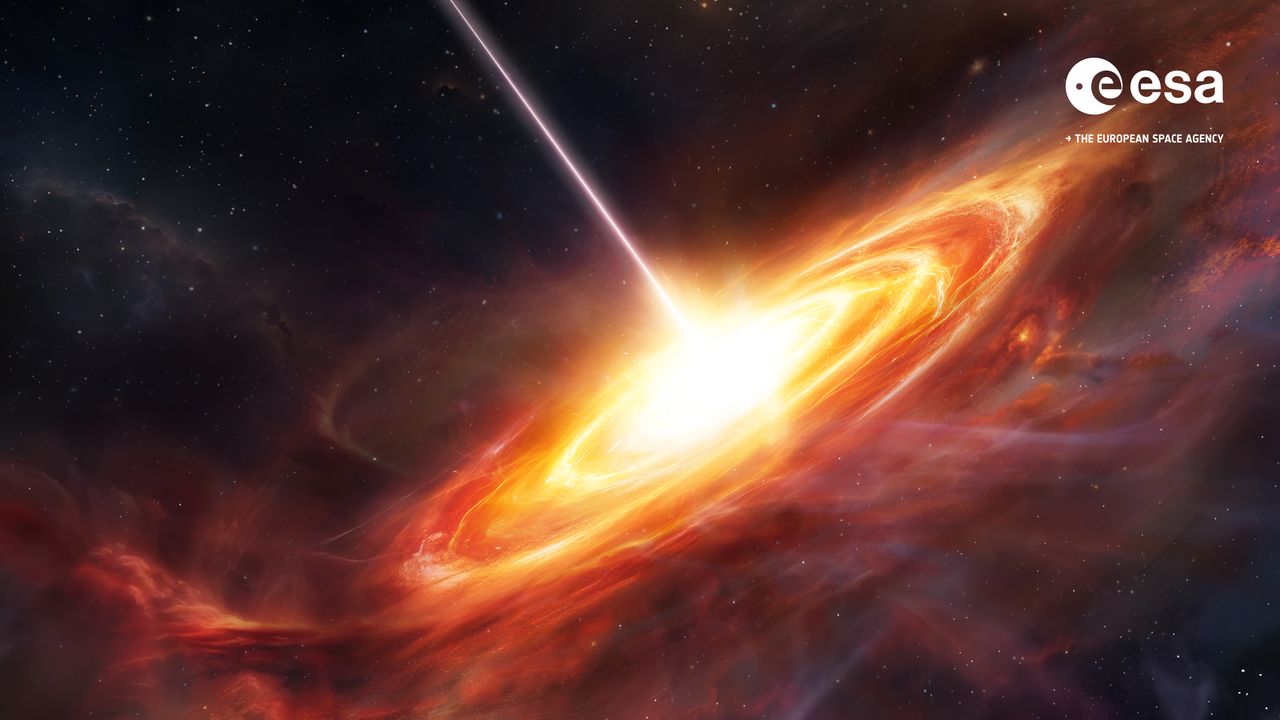
The Euclid space telescope has spotted the two brightest and oldest quasars ever seen, behemoth black holes blazing with the light of a trillion suns
Read Full Story at Live Science →Why This Matters
The discovery of these colossal black holes so early in cosmic history forces a reckoning with the limits of astrophysical theory. It suggests that supermassive black holes may have formed through mechanisms beyond traditional accretion or mergers, potentially reshaping our understanding of galaxy evolution in the infant universe. More than just a record-breaking find, this challenges the very timeline we use to map the growth of cosmic structures.
Background Context
Quasars—galaxies with hyperactive central black holes—have long been cosmic time capsules, but none have been observed in such extreme youth before. The James Webb Space Telescope has recently pushed the boundaries of early-universe astronomy, yet even those discoveries pale in comparison to the sheer scale of these black holes. Their existence defies the notion that black holes grow gradually, hinting at more violent or efficient formation processes in the dawn of time.
What Happens Next
Follow-up observations with the James Webb Space Telescope and the upcoming Roman Space Telescope will attempt to peer deeper into the environments surrounding these black holes, searching for clues about their rapid formation. If similar objects are found at even earlier epochs, the standard model of black hole growth may require a fundamental overhaul. For now, theorists are scrambling to reconcile these findings with existing cosmological simulations.
Bigger Picture
This discovery aligns with a growing pattern of 'impossible' early-universe phenomena challenging our cosmic narrative—from unexpectedly mature galaxies to quasars with impossible luminosities. It underscores how the universe, in its first billion years, may have operated under physics we have yet to fully grasp. If confirmed, these black holes could become a new benchmark for testing theories of dark matter, galaxy seeding, and the first generation of stellar objects.