NASA launches Roman Space Telescope to study dark energy
NASA launched the Roman Space Telescope to L2 to study dark energy and exoplanets. Its wide-field view is 200 times larger than Hubble’s, enabling critical cosmological discoveries.
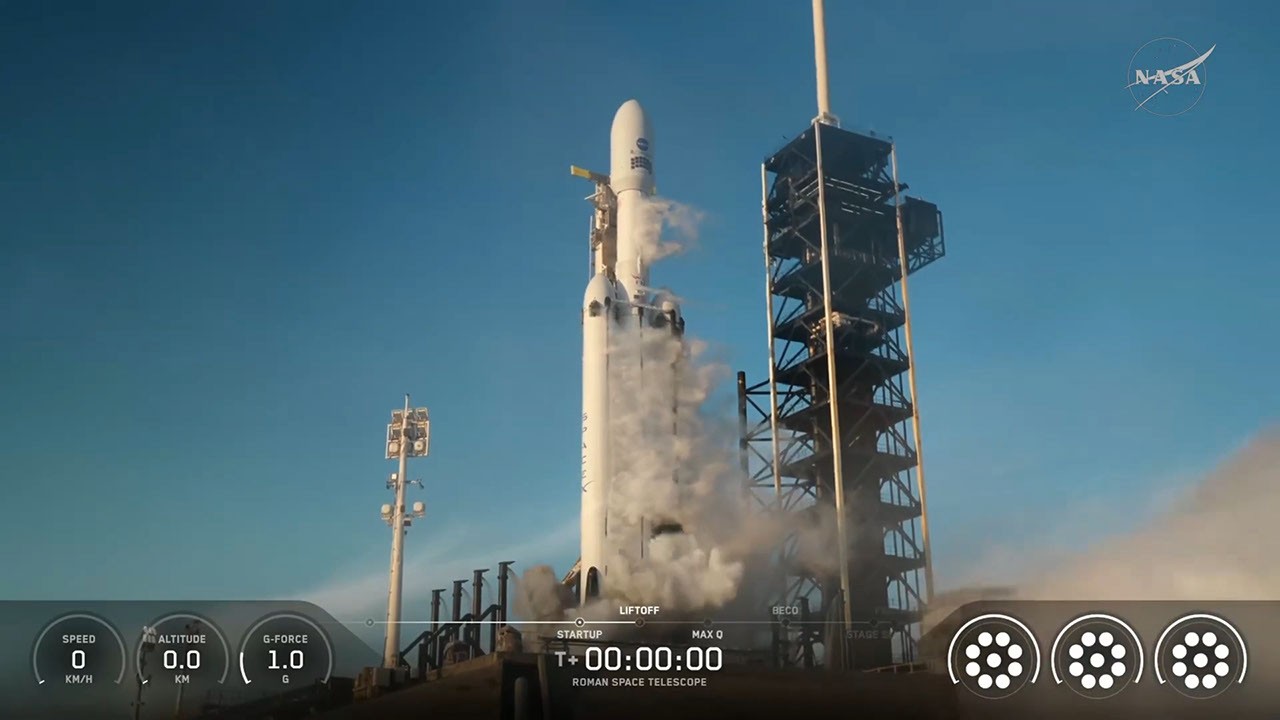
The Nancy Grace Roman Space Telescope successfully launched on August 31, 2026, marking a pivotal moment for NASA’s astrophysics division and the future of deep-space observation. Lifted atop a United Launch Alliance Atlas V rocket from the Cape Canaveral Space Force Station in Florida, the spacecraft began its journey to its final destination, the second Lagrange point or L2, located approximately 1.5 million kilometers from Earth. This location offers a stable gravitational environment that allows the telescope to maintain a constant orientation toward deep space without the interference of Earth’s atmosphere or heat radiation. The launch window was tightly constrained, requiring precise timing to ensure the spacecraft could reach its halo orbit with minimal fuel consumption, a critical factor for a mission designed to last at least five years.
This launch represents the culmination of decades of scientific planning and engineering refinement, positioning Roman as the successor to the Hubble Space Telescope in terms of wide-field survey capabilities, though with significantly advanced technology. Unlike Hubble, which focuses on narrow, high-resolution views, Roman is designed to capture images up to 200 times wider than Hubble’s field of view. This vast observational capacity is essential for addressing two of the most pressing mysteries in modern cosmology: the nature of dark energy and the prevalence of exoplanets. Dark energy, the mysterious force driving the accelerated expansion of the universe, remains poorly understood, and Roman’s primary mission involves mapping the distribution of galaxies and measuring the rate of cosmic expansion over billions of years. By observing how the universe has grown and changed, scientists hope to determine whether dark energy is a constant force or if it varies over time, which would fundamentally alter our understanding of the cosmos.
The telescope’s advanced instrumentation includes a wide-field infrared camera and a coronagraph technology demonstration, both of which are critical for its dual mission objectives. The infrared camera will conduct a deep survey of the sky, identifying thousands of new exoplanets through a technique known as microlensing, which detects the gravitational bending of light from distant stars. This method is particularly effective for finding Earth-sized planets in the habitable zones of their stars, a capability that previous missions have struggled to achieve at scale. Meanwhile, the coronagraph will block out the bright light of stars to directly image giant exoplanets, providing data on their atmospheric compositions and potential habitability. This technology serves as a crucial testbed for future direct imaging missions, such as the Habitable Worlds Observatory, which aims to find Earth-like planets in the coming decade.
As Roman settles into its orbit, the scientific community is preparing for a data deluge that will require sophisticated processing and analysis. The mission is expected to return petabytes of data, necessitating robust ground-based support and international collaboration to interpret the findings. The first images, scheduled for release shortly after the telescope reaches L2 and completes its deployment sequence, will provide the initial validation of its optical systems. Beyond the immediate scientific returns, Roman’s success will pave the way for the next generation of astronomical research, offering a clearer picture of the universe’s history and the potential for life beyond Earth. This launch is not just a technological achievement but a strategic step toward answering fundamental questions about our place in the universe.
Read Full Story at NASA →